+1 (800) 555-0142 · [email protected] EN · Storage RFQ desk
Phase before platform

Dexion Automation Roadmap from flow study to commissioning

A phased guide from flow study and SKU data to commissioning. Separate today's pallet presentation from tomorrow's automation assumptions while keeping live picks, interfaces, safety evidence and acceptance gates under control.

Review Readiness Questions
Warehouse roadmap linking manual pick flow to a phased storage automation path
The phasing story

Protect the live shift while the target storage state becomes clearer

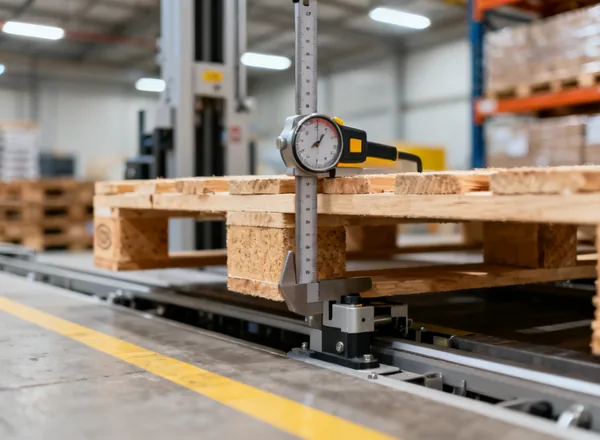
Many warehouses do not move from floor stacking to dense storage in one clean step. Loads, racks, doors, upstream systems and working practices already exist. A first phase can therefore focus on disciplined flow study: stable pallet presentation, measured bay geometry, consistent pickup locations, visible traffic priorities and a duty plan that fits the shift.

“Automation readiness is the removal of hidden variation—not the purchase of a label.”

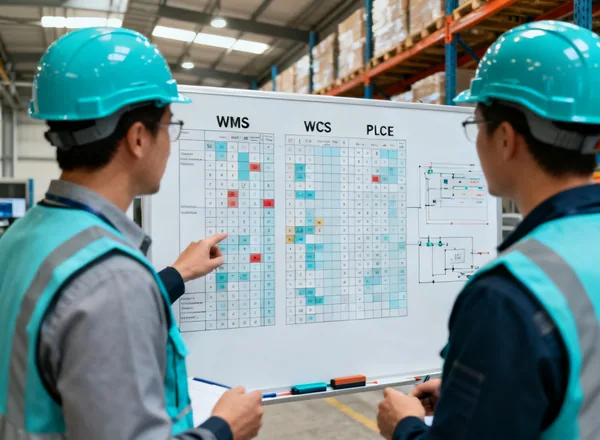
The second phase can instrument the process. Putaway calls, scan events, queue time, inventory cube utilization, damage exceptions and completed picks become usable records. If WMS, WCS, WES or PLC messages are expected later, their ownership and timing are described before an interface is promised. Manual and digital records may coexist while the business confirms which signal is reliable enough to control work.

The third phase compares selective racking, dense storage and AS/RS against the actual movement profile. Fixed automation can offer deterministic capacity and mature controls for stable pallet flows; flexible robotics or staged shuttle fleets can support faster phasing when demand is volatile. Neither side wins by slogan: flexibility still requires stable load presentation, traffic rules, power access and exception recovery, while fixed lines still need graceful degradation when a bay is blocked. The correct comparison includes peak order lines per hour, buffer occupancy, maintenance access and brownfield cutover—not headline pick rate alone.

“A phase is complete when operations know the normal state, the fallback state and who authorizes the change between them.”

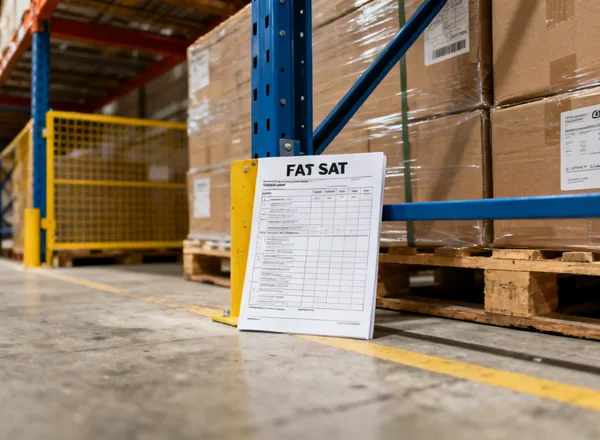
The final release is bounded by representative tests. Inputs, preconditions, expected results, logs, exclusions and unresolved issues are recorded. For a selective rack project this may be an application and inspection protocol; for an integrated AS/RS it may extend to emulation, FAT and SAT. The terminology changes, but the evidence chain remains.

Expandable readiness review

Open the Dexion question that can block the next phase

Each answer should point to an observation, drawing, system record, test or named owner. “To be confirmed” is useful only when it has a decision date.

Check pallet quality, dimensions, mass, load center, overhang, beam entry and the rate of damaged or rejected units. A machine-ready presentation face may demand tighter packaging than a skilled operator can tolerate. Improvements may begin with packaging, staging or inspection rather than machine technology.

Map crossings, blind corners, doors, fire aisles, temporary storage and manual truck interaction. Decide whether segregation, right-of-way, traffic control or layout change is practical. A clean drawing does not prove that a peak shift behaves the same way.

Name the source of work, acknowledgement, priority, cancellation, timeout, duplicate handling and completion record. If a WMS, WCS, WES, PLC or material flow controller is involved, define the message contract and recovery authority. Central orchestration can coordinate global priorities; modular control can isolate some failures but adds interface governance.

State the test environment, representative pallet and SKU mix, operating preconditions, expected result, required logs and issue-closure rule. Repeat normal, peak, blocked, communication-loss and restart cases appropriate to the phase. Performance figures remain conditional on this bounded method.
Request a phase review

Walk Dexion through your next automation gate

Share the flow study inputs, SKU data quality, interface owners and the commissioning window you can protect. We will help sequence the next evidence step—not invent a universal go-live date.

Please provide your name.
Please provide a valid email.
Please provide your company.
Please describe the application.
Consent is required to submit.